

How To Repair Small Cracks In Acrylic
When I started acrylic painting the first issue I had was one of my acrylic paintings neat! Losing my paintings I've done with a lot of love (and time) would be discouraging. And in this article, I'll show you how to ready cracked acrylic paintings quickly and easily! I'll besides show you how to save a canvas for repainting if you feel your cracked acrylic painting is beyond repair.
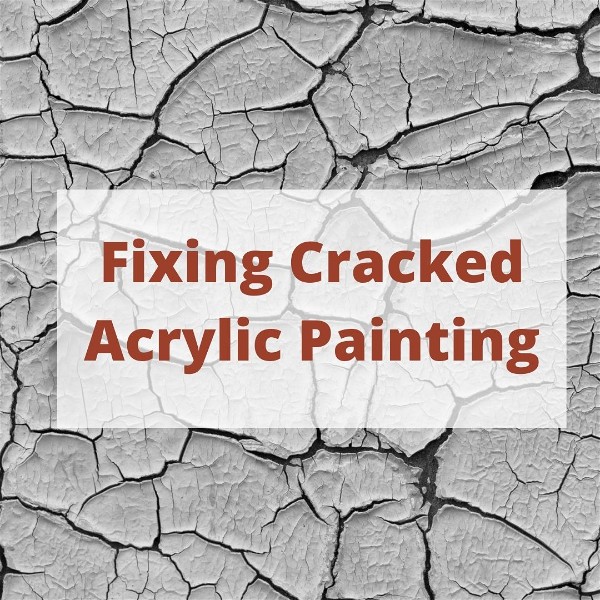
Can you fix cracks? You can definitely ready cracked acrylic painting! But how exactly can nosotros fix peachy acrylic paintings? The most popular mode to gear up cracking, which I personally recommend, is a simple fill up in option. Based on many artists' experiences, these are the 3 best ways to set an acrylic painting:
- Scraping or sanding off + repainting
- Filling
- But letting the painting be
The all-time method for y'all depends on your needs and what caused cracking. I'll explicate how to gear up your painting using each method stride by stride. Too, I will share how to avert cracking in your time to come paintings based on which medium you utilize.
Table of contents for how to set a cracked acrylic painting
- What is cracking and what is the difference between groovy and crazing?
- How to fix a cracked acrylic painting, the 3 best methods
- Scraping or sanding off + repainting
- Filling in
- Letting it be this way
- When does cracking and crazing happen?
- What causes acrylic paint to crack?
- How to prevent neat in your Painting?
- Concluding Summary Table: Causes, solutions, and prevention for acrylic painting cracks
What is bang-up and What the difference betwixt slap-up and crazing?
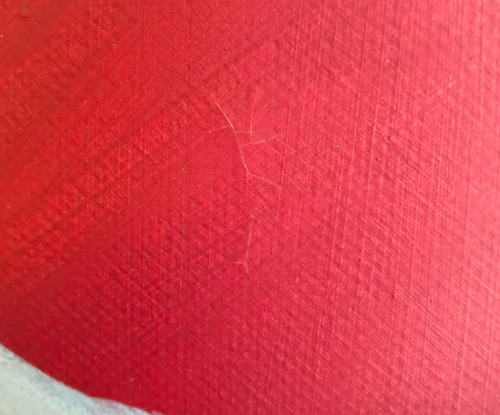
Cracking – A line, a pause on the surface of something along which information technology has split without breaking into separate parts.
Crazing – A fissure in a surface or coating (equally of glaze or enamel) or a network of fine cracks
As you can see, there is no dramatic difference betwixt bully and crazing. Feel gratuitous to use both terms and consider glazing more in the context of acrylic pouring and pottery.
How to prepare cracked acrylic painting?
Every bit we already know at that place are 3 ways to fix our croaky paintings:
- Scraping or sanding off + repainting
- Filling
- Simply letting the painting be
Each method has some nuances and the best method for your painting sometimes depends on what caused the cracking. There are many reasons why acrylic paintings crack. Though the methods of scraping, repainting, and filling are advisable for most causes of bully it is of import to empathise the reasons for the cracking. This helps usa not only cull the best method for repair and to avoid groovy in the future. We will cover the reasons for bang-up in paintings, the all-time method for repairing them, and how to preclude them in the future.
1 – Scraping or sanding off and repainting
Scraping, sanding off and repainting sounds a bit dramatic, I concur, but sometimes, if you really want to keep this painting (or just the canvass) you should consider sanding off (or scraping) the $.25 of the painting that are cracking.
If your painting has smaller, cracking spots that you would like to repair, sanding is the best selection for yous.
If yous prefer to remove all of the crack acrylic paint from the canvas in order to save and repaint the entire sheet, scraping is the best option for yous.
Later sanding or scraping, we so repaint and varnish our painting.
These approaches are expert ideas for both beginners and pros and here is why:
- If y'all are a beginner it'southward a bang-up manner to learn the art of painting and all the skills involved. Practice makes perfect.
- For Pros, information technology too works because through hours of experience they know exactly how to redo paintings even ameliorate.
- Sanding is also used not but to take off layers but also to create textures and absurd effects!
Be aware that sanding is not the same every bit but filling in a crevice! If you lot want to add together a new coat of paint or repaint or if yous see big cracks or bubbles and bumps then delight be enlightened you volition need to follow this guide commencement:
Step-by-step Sanding off and repainting guide:
If you wish to repair minor, swell spots on your acrylic painting, the sanding technique is a keen option.
Fourth dimension: up to three hours (depending on the size)
- Ready your painting and identify it under lite to see all cracks conspicuously.
- Go sandpaper. If yous choose to sand the cracked expanse, use fine-grit sandpaper to as non to ruin your beautiful masterpiece! 220 grit sandpaper is a great choice.
- To avoid waves or rippling on the canvas, place a slice of paper-thin behind, and support the back of the canvas with your hand while sanding.
- Utilize sandpaper over the cracks with circular motions. Depending on how large your painting is and how many cracks you have, this step could have upwards to 1 60 minutes. The result of this footstep – is a smoothen surface with no trace of cracks.
- Now you're ready to repaint the sanded area. Cull the colour wisely, if y'all already know that the paint you used the first fourth dimension was too transparent or patchy or caused cracks, don't utilise it once again. If possible, try the chosen color on a small-scale slice of your painting earlier actually repainting the whole sanded expanse.
- Repaint the sanded area using your favorite brush with 1 or 2 coats.
- Let the painting dry for 24 to 72 hours, with 72 hours beingness the maximum dry out fourth dimension before applying varnish (in pace 8) to avoid excess dust collecting on the painting.
- Use 2-iii coats of varnish
- It's washed! Congrats 🙂
Footstep-by-pace Scraping guide:
Scraping is another great option. Whereas sanding and repainting permit us to set up a unmarried croaky spot to restore a painting, in the scraping technique we remove all of the paint and preserve the canvass for utilize in another painting later.
Scraping is the best technique for utilize on a cracked acrylic painting if y'all decide to save only the canvas and redo the painting from scratch. Here is how we will get through the technique of scraping acrylic paint to fix the great:
Tip: Better do it over the sink if you accept a pocket-size painting.
- Wrap your painting in durable newspaper towels that won't dissolve apace in h2o. Make sure you lot have enough newspaper towels to cover each side of the painting.
- Place the painting into the sink and give it a proficient spray with h2o. This will cause the paper towel to stick to the painting. The paper towel will hold moisture in the painting and not in the wooden canvas support. Exit the wrapped painting for 20-30 minutes and give it some other good spray. Repeat this process until the painting is sufficiently soaked. This step will probably take several hours in total.
- Accept off the towels and become a knife fix to scrape. A pocket knife would exist fine.
- With an angle of xc degrees start scraping the painting. Don't press likewise hard to avoid damaging the canvas. The paint should easily scrape abroad. If not, render to step 2.
- Take a regular dish scrub sponge and scrape the rest of the minor pieces of cracked paint from the canvas.
- Let the canvas dry out overnight and it would exist ready to pigment again!
Hither is a video of how to scrape the acrylic painting:
2 – Letting it be
All fine art pieces are beautiful! It could be even beneficial if yous do some kind of marble, old-style or abstract acrylic painting or pouring. Y'all can ever pretend every bit if you fabricated it on purpose.
Did you lot know? Cracklepainting – is a painting technique aiming to requite a painted surface a crackle and aged look.
On SaatchiArt in that location are some Crackle Paintings For Sale, i of the most expensive is for 12,300$.
Also remember that many famous paintings in art museums around the globe have cracks, which only improve their look.
If the "letting it be" choice frustrates you, try to ask your friends nearly your painting without them knowing if it has any cracks or non. You will get an honest stance from 80% of the people about your painting and most volition say information technology looks just fine. Only you and nosey artists will point cracks.
Also try to discover a new identify for this painting, with different low-cal and decor around the painting, and come up back to look at it once again afterwards. Give yourself some time away from the painting, and a new backdrop may alter your stance of its beauty.
3 – Filling cracks with paint
The easiest fashion to fix acrylic painting is pouring cracks, which is very proficient both for beginners and pros and is a very simple fill-in process.
Step-past-step instructions for filling in cracks on acrylic paintings:
Full Fourth dimension: 45 minutes
Gear up the surface
Make sure the surface is clean and yous have enough light. The room temperature should be 65-75F or 18-24C for best results.
Choose the color
Prepare the basic color (i.e., white or whichever color yous feel volition look best). Use liquid acrylic paint.
If you know exactly which pigment you used previously for this specific expanse, perfect! Grab it and move to step 3. If no, you accept 2 options:
– find a skillful color for the area using a color chart or just your feeling
– mix your available pigment colors to get the right one, or as shut as possible
Fill in the cracks
Rub the paint within each crack with fingers or a textile. Fingers are best equally it's much easier because you lot will immediately experience where to add more than pigment or if the paint should be thinner.
Depending on the size of the cracks you can too employ a paintbrush, a spoon, a kid's plastic medication syringe, or a zip log back with a minor corner cut out to insert paint straight into the fissure.
Exist sure to add slightly more than the crack will accept equally the paint will compress as it dries.
Cleaning
In one case you lot have finished rubbing or filling the crack, clean the excess paint with a textile while trying to rub the pigment in fifty-fifty more.
Dry and repeat
In one case the paint has stale, check to see if the fill up was sufficient. If you feel it wasn't enough you tin echo step 3.
Be enlightened that if the crack is deep information technology will be hard to erase all traces of the fissure, but the filling will dramatically meliorate the aesthetics of the painting.
When does cracking and crazing happen?
Crazes and cracks grade during the initial drying process when the top coat of paint dries faster than the underlying layer. During the dying process, more cracks can announced. The painting can somewhen continue to cleft until it is completely dried.
six Reasons why acrylic paintings crack
The reasons why your acrylic paintings are swell are not numerous and are all very understandable and piece of cake to forbid.
Groovy happens to acrylic pouring but could occur to acrylic painting besides. The master reason why cracking occurs is we put also much love paint on the canvass and practice so also speedily, altering the drying process. It's important to note that often cracking is caused past multiple factors at once.
The 6 typical causes for cracking:
- Bad quality acrylic pigment
- Canvass stretching
- Pigment layer is too thick
- Pigment layer is likewise thin
- Inappropriate environs for the painting process and storing
- Bad painting process timing
Allow'south get into an in-depth written report of acrylic bang-up causes.
Bad quality paint
I'd like to underline here that the factor is the quality, not the price. Information technology's correct that sometimes we are more probable to think dandy occurs because of cheap materials. Information technology could admittedly be the case, merely don't blame your paints straight away, especially if you know that the paints worked before.
There are withal many forum users who count on cheap pigment and have great results.
Related mail service: 21 Best Acrylic Paint Brands for Beginners and Professional Artists
Think besides most how you shop your paints. If you do fluid art or acrylic pouring you might mix your paints first so shop them in bottles. Sometimes the paints aren't composite well plenty and develop clumps in the mixing process that affect the paint quality. These clumps tin can degrade the quality of the paint, ultimately leading to cracking later on. To avoid this, store only clean, well-mixed paint by pouring your mixed paints into bottles using a fine strainer to take hold of all bumps and clumps.
This way, nosotros shop and employ only good quality, well-mixed paint, helping us avert cracks later on.
Too much paint or as well thick layers
The more paint you lot put on a sheet, the college chances are of bully. This is particularly true if y'all have other factors increasing these changes, such as poor quality paint.
The pigment is besides thin
Sparse paint is a mutual problem when blending acrylic paints with water or solvents for acrylic pouring techniques. Acrylic paints are water-based by themselves. When there is as well much water in the mix (60% or more than), it will alter the pigment density of the paint to the state of wash. The water changes the consistency of the paint ever by making it thinner. Most chiefly, thinning paint with water decreases the adhesion of the paint to the painting surface.
Related postal service: How to Thin Acrylic Paint
How much water can I add to acrylic paints? You can add upward to xxx% water to acrylic paint to brand the coat rich and sleeky, up to lx% to make it watery like watercolor.
What kind of water should I utilise? Make sure you employ distilled water for pouring, not tap water.
What ratio and recipe are proficient for acrylic pouring?
- For fluid acrylics: 2:1 Paint to Pouring Medium;
- For craft acrylics: 1:one Paint to Pouring Medium;
- For medium body acrylics: i:three Paint to Pouring Medium;
- For heavy body acrylics: one:six Paint to Pouring Medium.
Bad sheet
The well-nigh mutual issue regarding canvas problems is that the sail is not stretched properly, which contributes to cracks during the drying process.
Related postal service: Best Canvas for Acrylic Painting for Beginners in 2022 that Professionals use
How to gear up badly stretched canvas before painting
If you lot are virtually to paint and find that your canvass is saggy, attempt to set the sheet before painting. This method takes a decent amount of time and sometimes it'due south worth just using a new and properly stretched sheet.
What you lot will demand:
- Measurement tape
- A slice of chipboard or similar solid material bigger than your canvas. Not pieces!
- Spray bottle
- Knife
- Hairdryer
- Wood keys for canvas (yous can purchase these here**)
- Hammer
A step-past-pace guide to fixing a loose canvas:
- Measure the frame of the canvas from the inside.
- Cut chipboard (or another cloth y'all've institute) at least 1/2″ bigger than the measurement of the sides and 1″ smaller than the measurement of the pinnacle and bottom.
- Fit the board between the frame and the canvas.
- Fill the spray bottle with h2o and spray the back of your canvas in between the frame and canvas. Make certain you lot don't soak the canvass!
- Dry it with a hairdryer.
- In the canvas frame, you will run into in the corners special holes for wood keys to tighten the canvass. You demand to purchase them separately.
- Tap ii keys into each corner with a hammer. Be gentle!
- When yous are done, remove the board.
Environment
In that location are 4 environmental factors to consider while doing the acrylic painting or pouring: temperature, humidity, airflow, and elevation. Make a notation – annihilation that causes a difference in drying times betwixt layers of paint increases the chance of cracking.
Temperature: It is best to go on your paintings in rooms where the temperature is between 65-75 degrees Fahrenheit. When the temperatures are over 75 degrees Fahrenheit (over 24C) the layers of paint will dry at a unlike speed (causing crazing) and temperatures under 65 degrees Fahrenheit (under 18C) don't let the acrylic paint dry out, or brand the drying process slow and fifty-fifty lead to freezing as acrylic paints are made of h2o and water-based solvents. This will also cause cracking and other undesirable effects.
What temperature is good to store acrylic paintings? 65-75 degrees Fahrenheit (18 – 24 C).
The temperature is important throughout all paintings' lifetimes. If this painting has been kept in an surround where at that place is a lot of humidity in the warm months and then dry heated air in the cold atmospheric condition months, it tin can crusade some pretty extreme expansion and shrinkage of the canvas support. The temperature changes stress the painted surface and may result in cracks.
Humidity: When the humidity is too high (over 50%) your paintings will non dry because the h2o molecules in the paint can't evaporate. Depression humidity (nether xl%) makes the paint dry out too fast which provokes crazing because the h2o molecules in the paint evaporate at a much faster rate.
What level of humidity is practiced to shop acrylic paintings? The best humidity tostore artwork is forty-50%.
Airflow: This factor is generally combined with the humidity cistron. If yous take a fan blowing on your drying painting in a low humidity climate then chances are that the top layer will dry faster and cause cracking.
Tin can you utilise a fan to dry acrylic paintings? You tin can utilize a fan to help your paintings dry without causing crazing only in a loftier humidity room.
Note that the corporeality of air in the room has more than influence on the top layer drying fourth dimension and less on the bottom one, so again information technology increases cracking risks.
Elevation: Loftier elevations will help your painting to dry quicker because of the college air pressure level. Air force per unit area helps molecules move faster. Lower meridian areas will slow the drying of your painting.
Bad timing
Bad timing tin can crusade cracks and crazing in acrylic paintings due to 2 factors
- Non enough cure time between layers, especially thick layers, because the layers dry at different rates.
- Not enough time for the drying process before varnishing or transporting
How long does information technology take for acrylic paintings to dry?
Thin layers will dry out in 20 to30 minutes and thicker layers can take an 1-2 hours to dry out.
For acrylic cascade paintings leave for 24 – 72 hours to dry and betwixt 7-fourteen days to cure.
Related mail service: How Long Does Acrylic Paint Accept to Dry?
How to prevent acrylic painting or pouring from cracking
So now nosotros know exactly what happened and nosotros spent 30 min or a couple of hours fixing the cracked acrylic painting. Considering how much time we spend creating and how demotivating cracks and crazing can be, its worthwhile to try and avoid happening again.
The post-obit pieces of advice will assistance you lot bask your creative process even more (past meliorate preserving your cute artwork). Plus I added a total summary tabular array at the end of the commodity to briefly review everything we talked about.
Try this to prevent swell in acrylic paintings:
- Ensure your pour paint mixture is good enough quality. Mixing paints with floetrol and/or glue keeps paint drying smoothly. Try this: iii parts floetrol + 2 parts glue + 1 parts pigment.
- Make certain your pigment is not too thick and non too thin.
- Add together a good retarder to wearisome the drying process.
- Adjust ecology variables: right temperature, humidity, air at the workplace, and storeroom.
- Utilize good quality acrylic paints and canvases
- Size the back of the sail earlier painting to protect it. Ane of the recommended recipes for sealing agents to the back of the sail is iii coats of 50/fifty mix of acrylic medium mixed with water, make sure yous permit each coat dry for at least 24h.
- Have notes of what you use on each slice because when y'all're experimenting it can exist easy to forget exactly what was used!
- Varnish your painting only afterwards it completely dries.
Summary How To Gear up Croaky Acrylic Painting:
| The reason "Why" | Impact | How to fix cracks | How to prevent swell |
| Bad quality paints | 2/v | Sanding and repainting with good quality paints | – Buy only recommended paints and don't use expired ones. – Take notes while experimenting or working on materials. – Test paint again on a small piece or alter the paints |
| Likewise thick | 4/5 | Sanding and repainting or filling in | Follow the most adequate for your mixing recipe. |
| Too sparse | three/5 | Sanding and repainting | Follow the well-nigh adequate for your mixing recipe. |
| Environment | four/five | Set the cracks one of 2 ways or let them be and make sure your storage room meets all requirements | Keep your workspace betwixt 65-75 degrees Fahrenheit (eighteen-24C) with forty-50% humidity and no fans. |
| Canvas | 1/v | If you notice information technology before painting, you tin ready the canvas itself. If information technology comes up during drying or lifetime, endeavour to fix the sail with cardboard or attempt to set the painting itself. | – Size canvas before painting – Purchase only recommended and properly stretched sheet. – Accept notes while experimenting or working on materials. |
| Time | four/5 | Sanding and repainting or filling in | – For acrylic pour paintings exit information technology for 24 – 72 hours to dry and betwixt 7-14 days to cure. – Add a retarder to wearisome the drying procedure. |
Another helpful video about fixing acrylic pour paintings:
Related Questions
How to stop acrylic paint from peachy on fabric or denim? Mix your color with the professional Fabric Medium to raise the flexibility of the stale paint before painting. Make certain you lot don't add too many paints or Whatever water! Besides, don't forget to do heat-sitting.
How do I gear up a painting with too many layers of acrylic paint? If the painting dried with no cracks, don't do anything. If you have cracks, the best option is to sand off extra layers. Yous can also contact a professional restorer to piece of work on information technology, as they will have the tools and expertise.
How to go on acrylic paint from swell on plastic? Sometimes the acrylic paint will but peel off the plastic, especially if the plastic surface is smooth. Use a stabilizer to preclude cracking or peeling. You can too utilize a sealer to make the results more than permanent.

How To Repair Small Cracks In Acrylic,
Source: https://acrylicpaintingschool.com/how-to-fix-cracked-acrylic-painting-easy/
Posted by: smallwoodtheel1940.blogspot.com
0 Response to "How To Repair Small Cracks In Acrylic"
Post a Comment